

If you’ve already read our first article on AI Tags, you know the feature was built to mirror the way people naturally search for homes. Instead of sticking to rigid filters like “Price” or “District,” you can now find properties based on everyday search terms – things that make your home ideal.
But to truly get the most value out of them, it helps to understand how the feature was built, how you can use it in a more strategic way, and what kinds of possibilities open up when you begin combining tags that reflect your real lifestyle needs.
This guide walks you through all of that, including a case study of how someone just like you can use our AI Tags to find a home that fits seamlessly into their life.
Table of contents
- How the AI Tags feature was built
- How to use 99.co’s AI Tags like a pro
- Where AI Tags appear
- Choosing and combining tags
- A case study: How Christine found her ideal home
- Step 1: Start with what matters most
- Step 2: Ensure it suits a growing family
- Step 3: Consider her lifestyle needs
- Step 4: Plan for her son’s schooling
- Not sure where to start? Explore the most popular tags
How the AI Tags feature was built
When we set out to create AI Tags, the goal wasn’t simply to add another feature to the search experience. It was to bridge the gap between how people naturally think about homes and how traditional property filters operate.
To do that, we grounded the development process in real behaviour instead of assumptions. The team behind the feature analysed several sources that reflect the way Singaporeans actually search for and describe homes every day. These included:
- The most common search terms typed on 99.co
These tell us what people actively look for each month, from “near MRT” to “fully furnished”. - Popular Google search phrases related to property in Singapore
This helped us understand what you search for even before arriving on 99.co. - Themes that repeatedly show up in listing descriptions
Agents often highlight features such as “high rental yield”, “bright unit”, or “dual-key layout” – things that matter in real decision-making. - Existing platform filters
We examined where filters were effective, and more importantly, where they fell short.
This entire set of insights was then fed into an AI model trained to scan listing descriptions and match each listing with the most relevant tags. This meant the tags weren’t chosen at random – they emerged from the language that home-seekers and agents consistently use.
This is also why AI Tags feel more natural. They are built on what you already think about when choosing a home, not on what filter systems assume you care about.
How to use 99.co’s AI Tags like a pro
You may already understand that you can click on tags to narrow down your options. But to make the most of them, it helps to know where you’ll find them and how to combine them to create a more precise, personalised search experience.
Where AI Tags appear
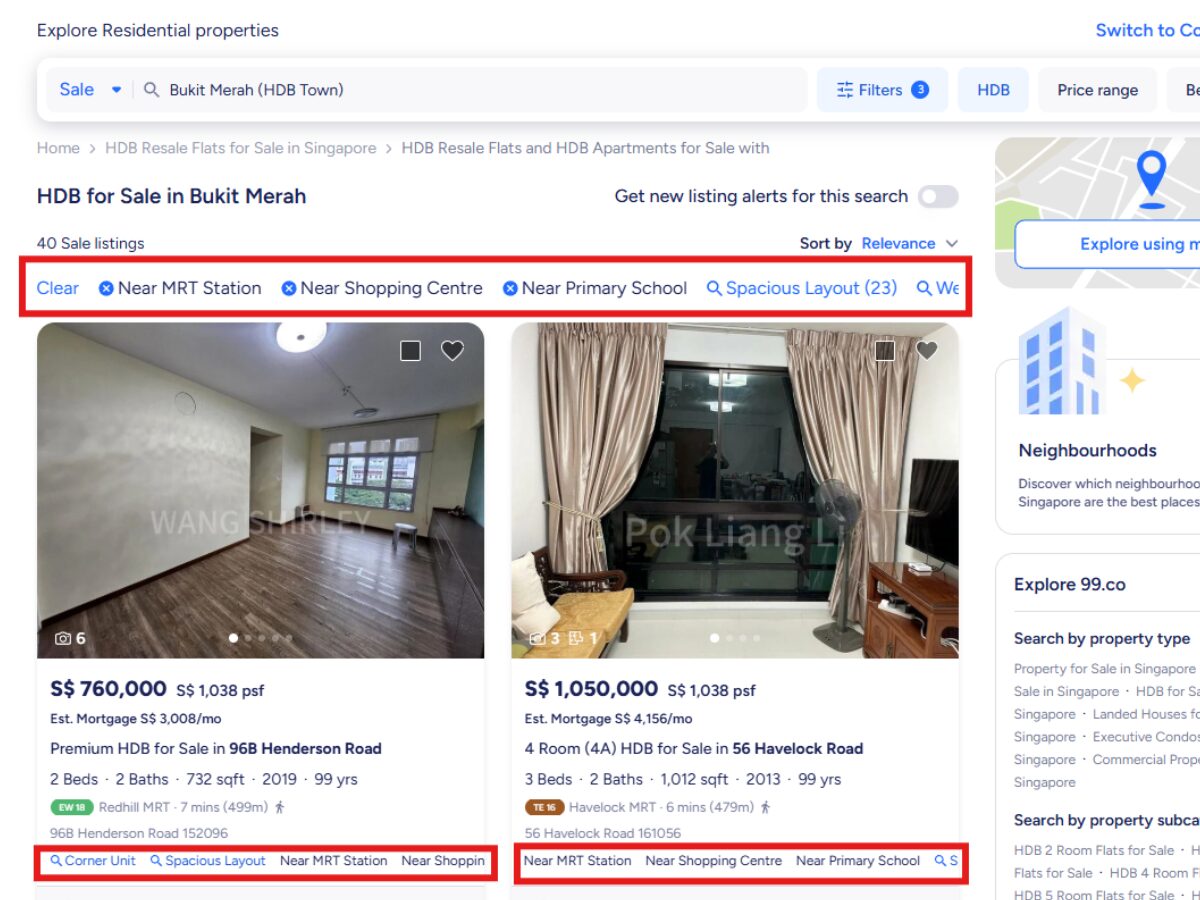
To make your search feel seamless, tags are surfaced in multiple places:
- On the homepage – surfaced early so you can jump directly into the types of homes you care about.
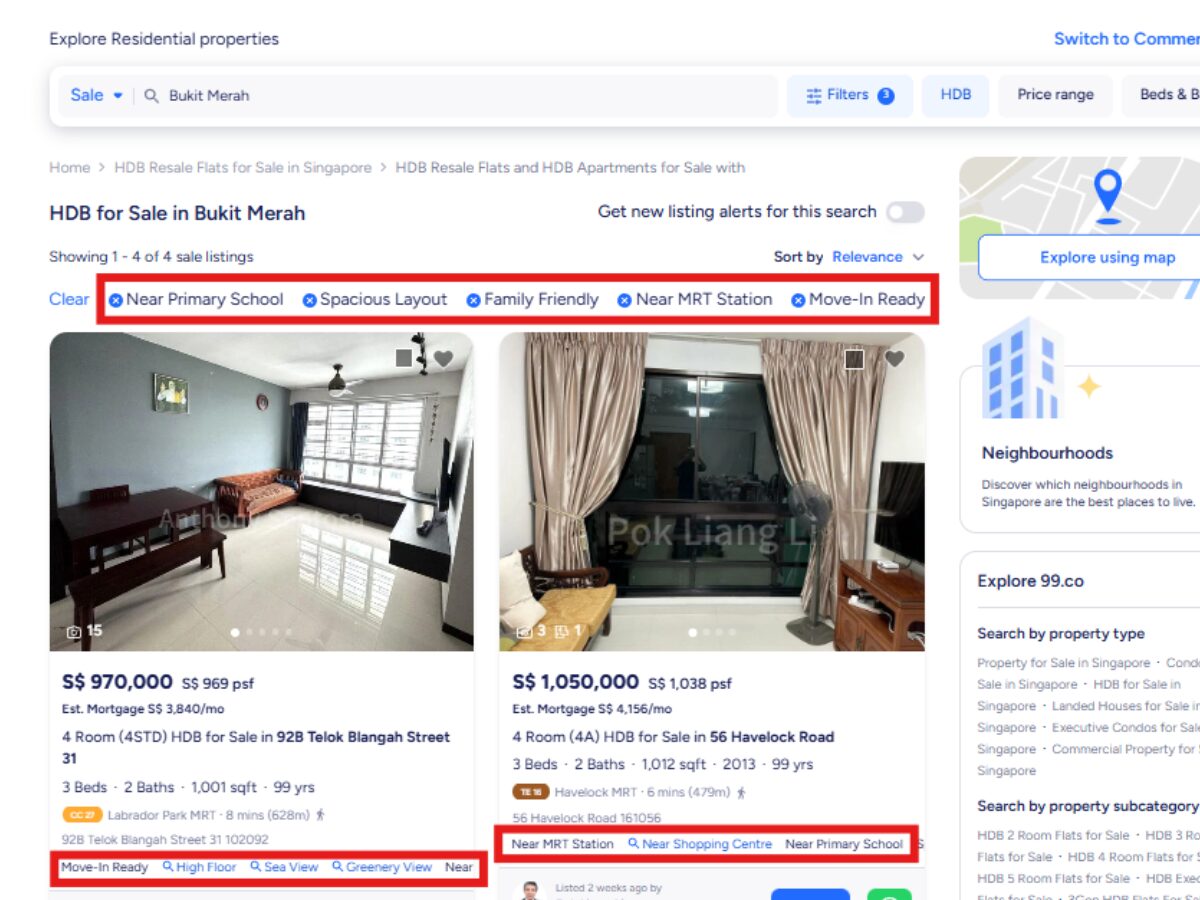
- On the search results page – where you can quickly add or remove tags to refine your list.
- On each listing card – giving you at-a-glance context while browsing.
- Above the listing description – highlighting the most important features before you even start reading.
No matter where you begin your search journey, these tags are designed to meet you exactly where you are.
Choosing and combining tags
Most people start with one tag, typically something crucial like “Near MRT Station” or “Spacious Layout”. But the real power of AI Tags comes from combining multiple keywords that reflect your lifestyle needs.
Some examples of combinations include:
- Near MRT Station + Move-In Ready
- Family-Friendly + Near Primary School
- Spacious Layout + Well-Maintained
- High Floor + Bright and Airy
More than 20,000 AI tags have already been generated from real listing content, and over 2,000 of them have been used by consumers since launch. Users currently apply an average of two tags per search, and in just the first month, these combinations surfaced more than 2 million unique listing results.
This is only the beginning – once all 20,000 tags are actively used, the number of possible combinations could expand into the multiple millions, giving you an increasingly refined and truly personalised search experience over time.
A case study: How Christine found her ideal home
To bring this to life, let’s follow Christine Ng, a 34-year-old mum expecting her second child. She and her husband currently live in a 2-room flat with their 4-year-old son. With a new baby arriving soon, they need more space, better convenience, and a home that fits their daily routines. They’re also planning to move to Bukit Merah so they can be closer to her husband’s workplace – a shift that would make childcare, commuting, and family time much easier.
Here’s how Christine can use AI Tags to find her ideal home:
Step 1: Start with what matters most
Christine’s top priority is convenience. With a newborn and preschooler, she wants to minimise travel time.
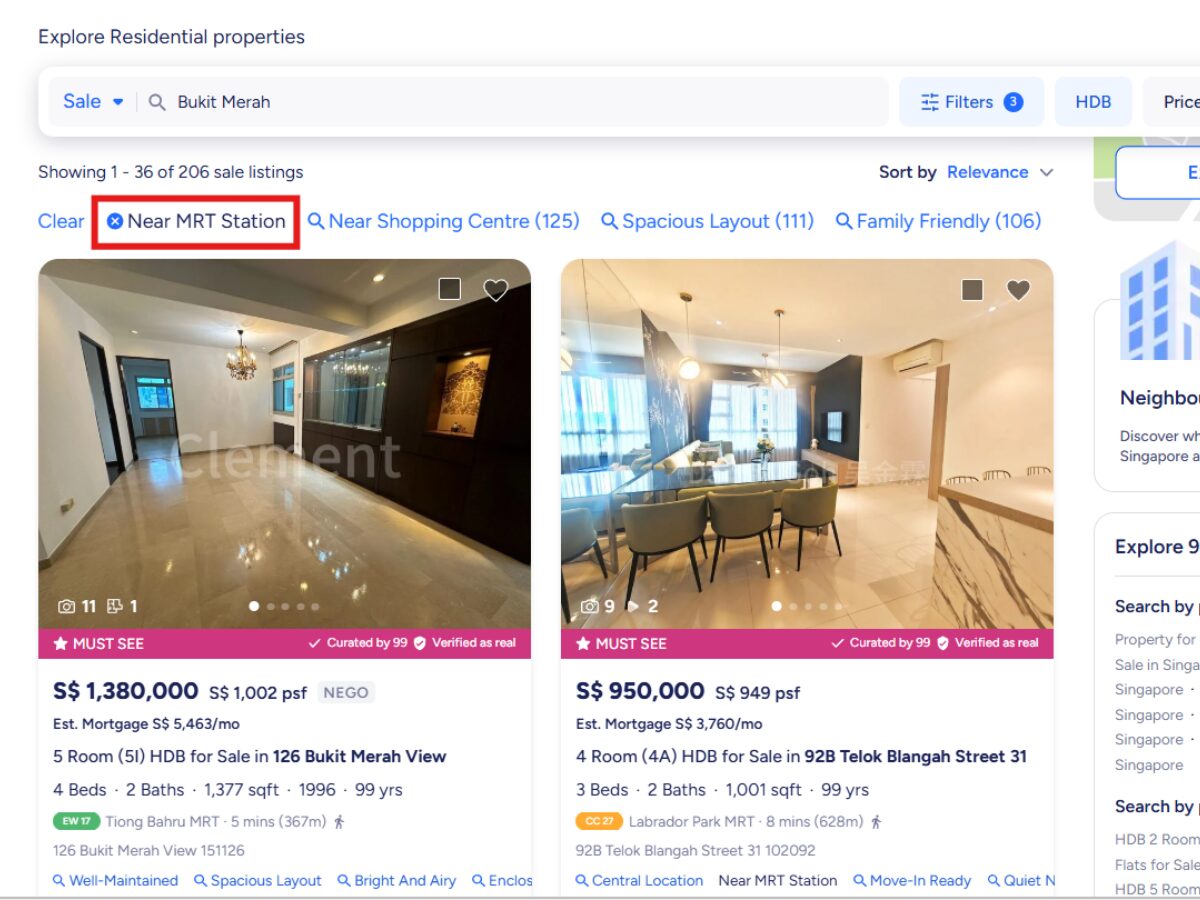
She selects:
🔍 Near MRT station
Immediately, her search becomes more manageable.
Step 2: Ensure it suits a growing family
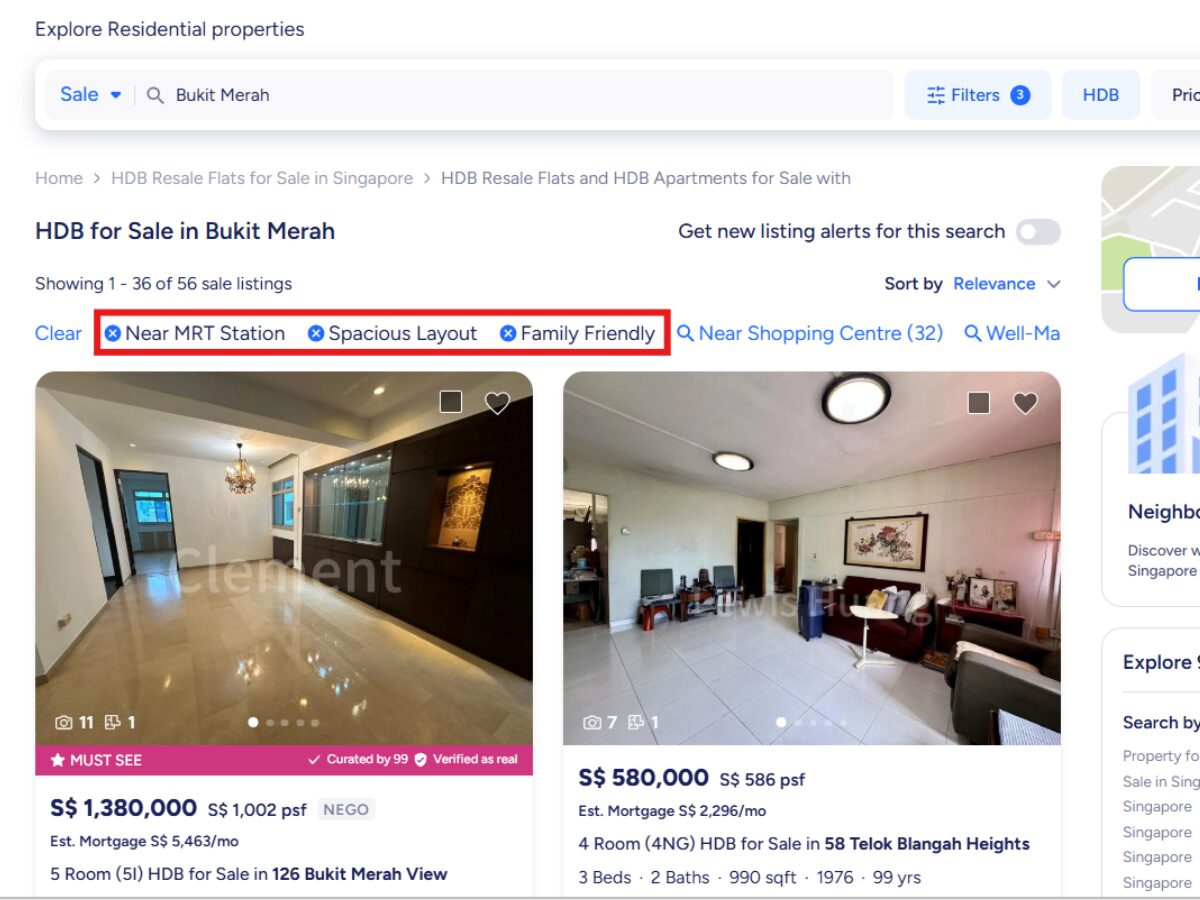
Next, she wants a practical layout where her kids can move around comfortably.
She adds:
🔍Spacious layout
🔍Family-friendly
Now she sees homes that are built with families in mind – not just any larger unit.
Step 3: Consider her lifestyle needs
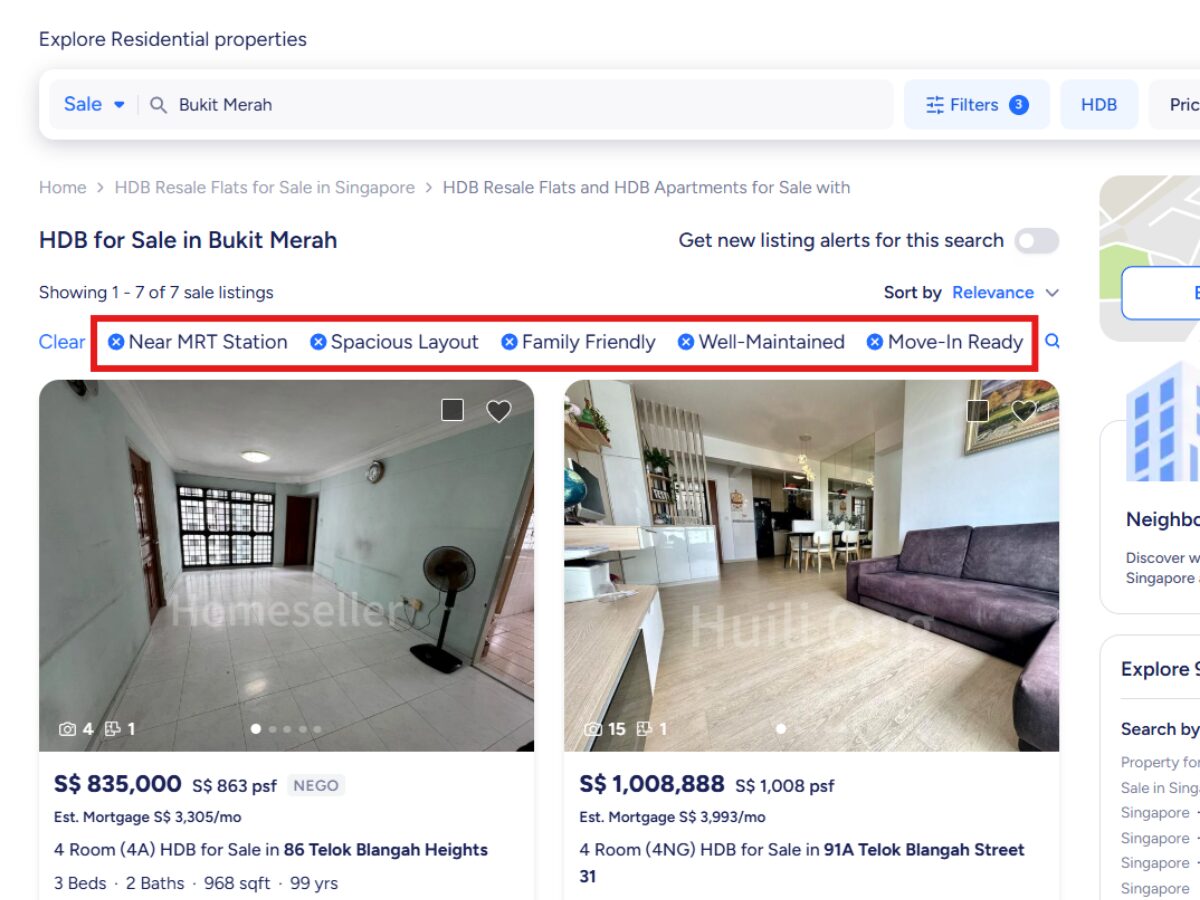
Christine works full-time. Renovation work, delays, and hidden repairs are the last thing she wants.
She adds:
🔍Move-in ready
🔍Well-maintained
This cuts out older units requiring major repairs, saving her time and stress.
Step 4: Plan for her son’s schooling
Her son will enter Primary 1 soon. So proximity to schools is key.
She adds:
🔍Near primary school
This combination instantly brings up listings that check nearly every box – without Christine typing anything into the search bar.
As she scrolls, she sees AI Tags surfaced on each listing card, helping her quickly spot which units best match her needs. When she clicks into a listing, she finds the same tags above the description, confirming whether it’s worth reading further.
Instead of sifting through hundreds of irrelevant options, she now engages only with listings that genuinely fit her family’s next chapter. The search becomes faster, more focused, and far more aligned with the life she’s building.
Not sure where to start? Explore the most popular tags
While you can explore all available tags on the platform, some have proven especially popular among home-seekers so far. If you want a place to start, here are the ten that users rely on most today:
- Near MRT station
- Spacious layout
- Fully furnished
- Family-friendly
- Near primary school
- Well-maintained
- High floor
- Near shopping centre
- Move-in ready
- Freehold property
These aren’t the only tags available. Depending on your needs, you can also explore options like “Bright and Airy”, “Corner Unit”, “Utilities Included”, “Female-Only Room”, “Aircon Installed”, and many more.
A smarter, more human way to search
Whether you’re like Christine, planning the next stage of your family life, or simply searching for a place that fits better with your daily routine, our AI Tags give you a clearer, more meaningful way to find the right home.
They’re simple to use, incredibly flexible, and designed around how your mind works.
Whenever you’re ready, try combining a few tags and see how quickly you uncover listings that truly match your lifestyle – without typing a single word.
The post How to get the most out of AI Tags: Your guide to smarter, faster home-searching appeared first on .
